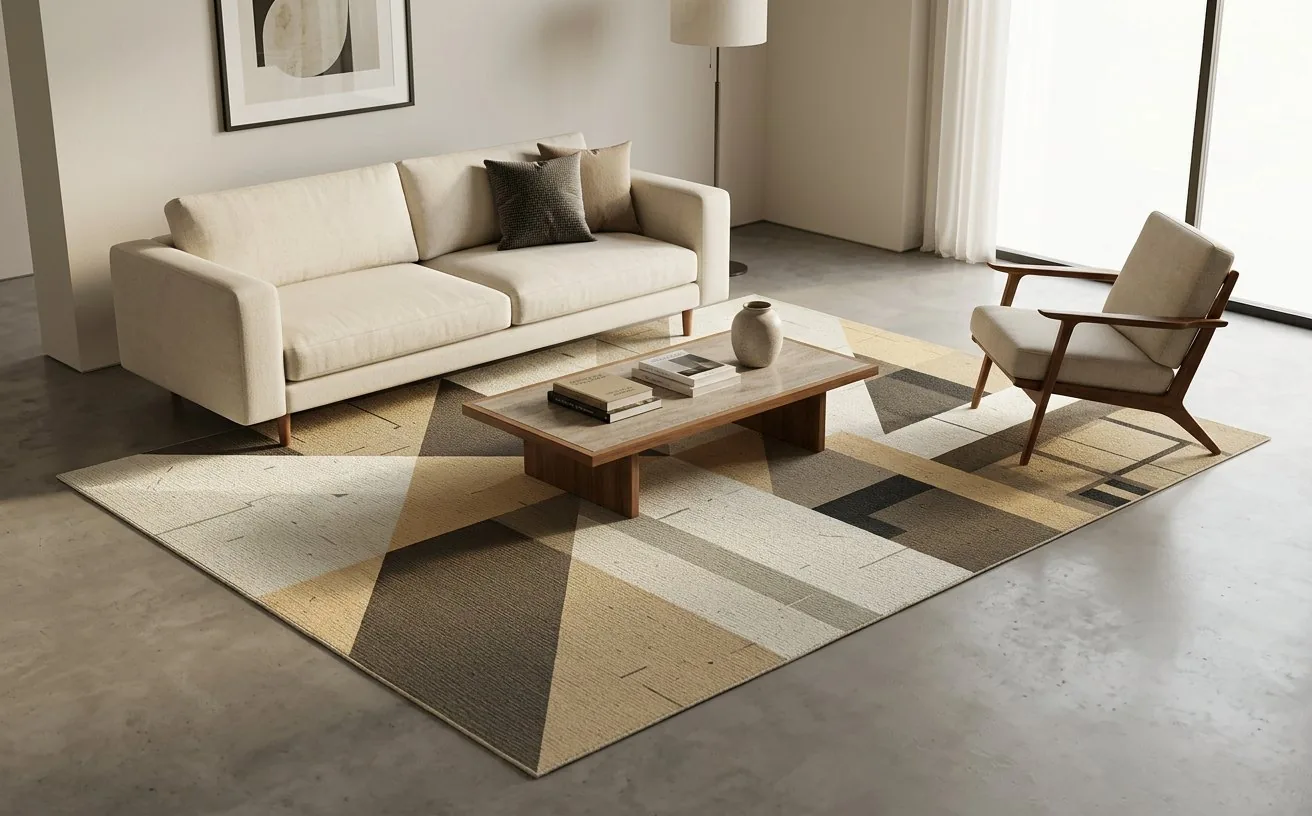
“What size rug should I buy for my living room?” is one of the highest-intent rug questions because size mistakes are expensive and visually obvious.
This guide gives you practical rules you can apply in minutes. You can cross-check examples in the current all rugs collection while measuring your own room.
Rule 1: Let the rug connect furniture, not float alone
The most reliable layout in a typical living room is front legs on the rug for major seating pieces. That creates one visual zone and prevents the “postage stamp rug” effect.
If your room is large enough, all legs on the rug can look even more intentional.
Rule 2: Keep edge breathing room
A good baseline is leaving visible floor around the rug perimeter (often around 12-24 inches depending on room scale). The exact number matters less than consistent margin on all sides.
Rule 3: Prioritize width under the sofa run
Most sizing mistakes happen because buyers optimize depth but miss width. In living rooms, rug width usually has the strongest impact on visual balance.
Rule 4: Use shape to support circulation
Rectangular rugs are usually easiest for sofa layouts. If your room is narrow, orient the longer side with the main seating axis to improve flow.
Rule 5: Measure with tape before you shop
Do a quick tape outline on the floor before ordering. This prevents almost all major sizing surprises. For room-by-room visuals, also use the full size guide.
7 common rug size mistakes (and fast fixes)
1) Rug too small for the conversation area
- Fix: Move to the next size up so at least front legs of key seats land on rug.
2) Rug too narrow vs sofa width
- Fix: Choose a wider rug that visually anchors both sofa and adjacent chair positions.
3) Rug blocks major walking path
- Fix: Reduce depth slightly or shift placement to keep main circulation clean.
4) Over-rotating on “perfect symmetry”
- Fix: Prioritize function and seating relation before exact center lines.
5) Ignoring side tables and ottomans
- Fix: Check how secondary pieces sit relative to rug edge in your tape mockup.
6) Matching old rug dimensions without re-checking furniture changes
- Fix: Re-measure after any furniture swap.
7) Choosing size from product photos only
- Fix: Use room measurements first, style photos second.
If you are pairing sizing with shade selection, this companion post on rug colors for gray sofas helps shorten decisions.
Quick room-size framework
- Small living room: prioritize full seating connection over oversized margins.
- Medium living room: front-legs-on-rug layout usually gives the best balance.
- Open-plan living area: larger rugs help define the zone cleanly.
Layout-friendly options to compare

Modern Golden Ochre Abstract Block Rug

Earthy Terracotta Ochre Tiled Square Grid Rug

Geometric Monochrome Layered Pyramid Art Rug

Abstract Navy Topographic Mountain Compass Rug
Final takeaway
For living room rugs, going one size larger is often the safer decision when you are between sizes. The right rug should make seating feel connected and circulation feel natural.
Explore more planning content in Size & Placement.